
Tourism promotion in Gran Canaria relies on materials such as the leisure guide, available in both physical and digital formats. The challenge of this research was to evaluate how tourists perceive and use the guide, identify the elements that attract the most visual attention, and determine which aspects require optimization. The ultimate goal was to provide evidence-based recommendations to improve communication effectiveness and user experience.
Objectives
The main objectives were:
Evaluate user perception of the guide in its different versions.
Measure the functional utility of the guide during trip planning and the visit itself.
Define format strategies to optimize the guide.
Complementary objectives included analyzing typography and legibility, text density, visual hierarchy, image impact, accessibility and inclusivity, and the role of the guide in pre-trip planning.
Hypotheses
Several hypotheses were tested, including:
Large images integrated with text generate more interest than smaller visuals.
Call-to-action phrases capture user attention.
The absence of highlights increases visual dispersion.
Text length influences attention distribution.
Visual hierarchy clearly guides the reader’s gaze.
Images in the guide effectively represent strategic concepts such as sustainability.
Methodology
The study was designed and executed at EMOTUR Lab, combining neuromarketing techniques with declarative instruments:
Fixed Eye Tracking: Participants viewed digital pages of the guide on a screen. This measured gaze order, fixation duration, and visual hierarchy. An Implicit Association Test (IAT) was also applied to evaluate subconscious associations between strategic concepts (e.g., sustainability) and the images.
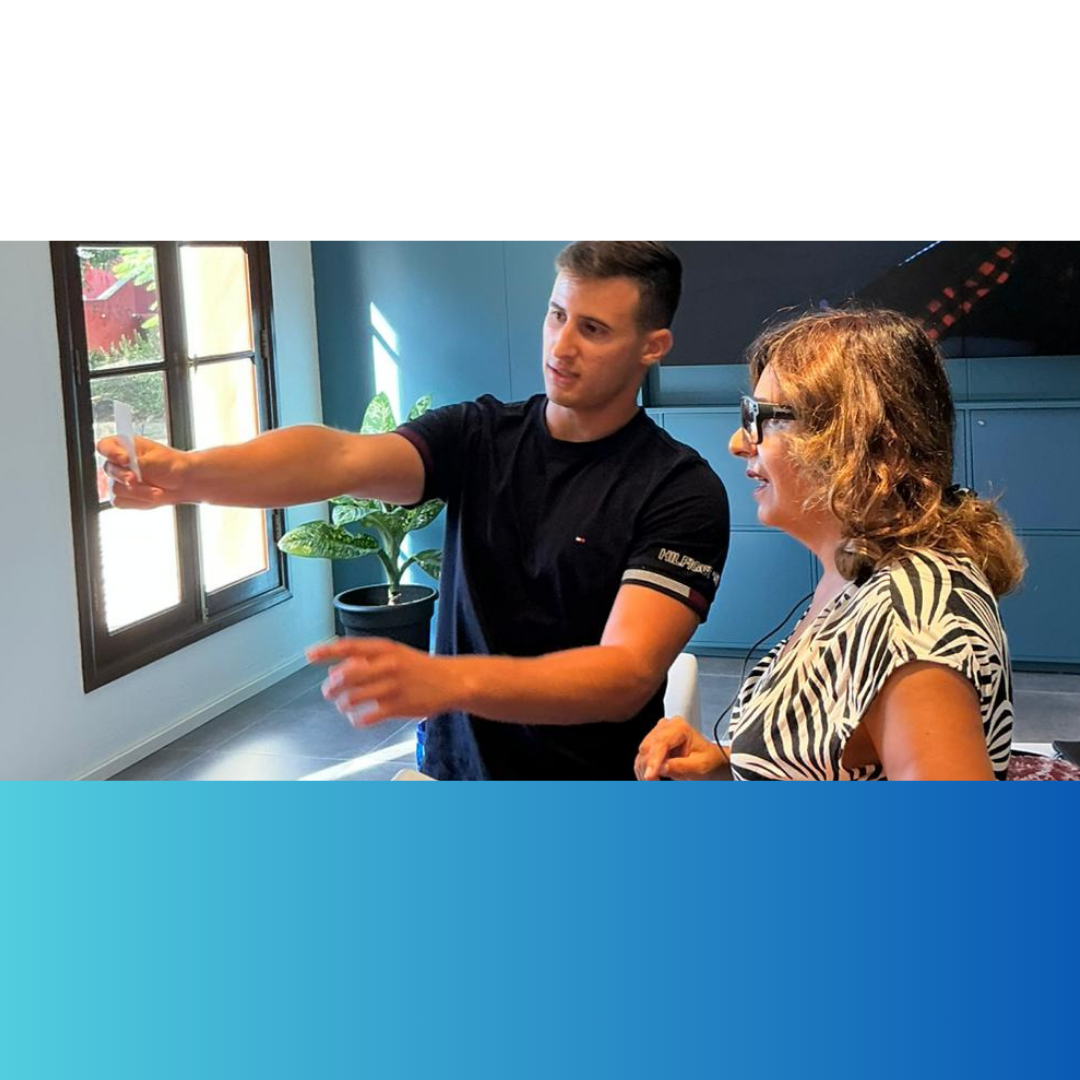
Mobile Eye Tracking: Using eye-tracking glasses, tourists interacted freely with the physical guide. This revealed spontaneous behavior, such as which pages attracted immediate attention and which elements were overlooked.
Questionnaire: After each test, participants completed a semi-structured survey capturing satisfaction, perception, tourist behavior, and sociodemographic data.
The total sample consisted of 92 tourists, divided into two groups according to the technique applied. Stimuli included original pages of the Gran Canaria guide, modified alternatives, and comparative examples from other destinations (Tenerife, Algarve).
Results
Higher visual engagement: Large images integrated with text captured more attention than smaller ones.
Effectiveness of call-to-action phrases: Highlighted phrases successfully directed user focus.
Impact of text density: Long blocks of text reduced attention and comprehension, confirming the need for concise content.
Visual hierarchy: Clear structure guided exploration and improved navigation.
Conceptual representation: Images effectively communicated strategic values such as sustainability and authenticity.
User satisfaction: Tourists considered the guide useful, though improvements were noted in readability and inclusivity.
Conclusions
This case study demonstrates that combining neuromarketing and UX analysis, as applied at EMOTUR Lab, provides a comprehensive understanding of tourist behavior when interacting with promotional materials. For the Gran Canaria leisure guide, the findings highlight the importance of:
Prioritizing large, integrated visuals.
Incorporating call-to-action phrases.
Reducing text density to improve readability.
Maintaining clear visual hierarchy.
Aligning images with the destination’s strategic values.
The study confirms that applying scientific methodologies to tourism design and communication allows destinations to optimize user experience and strengthen brand positioning.