
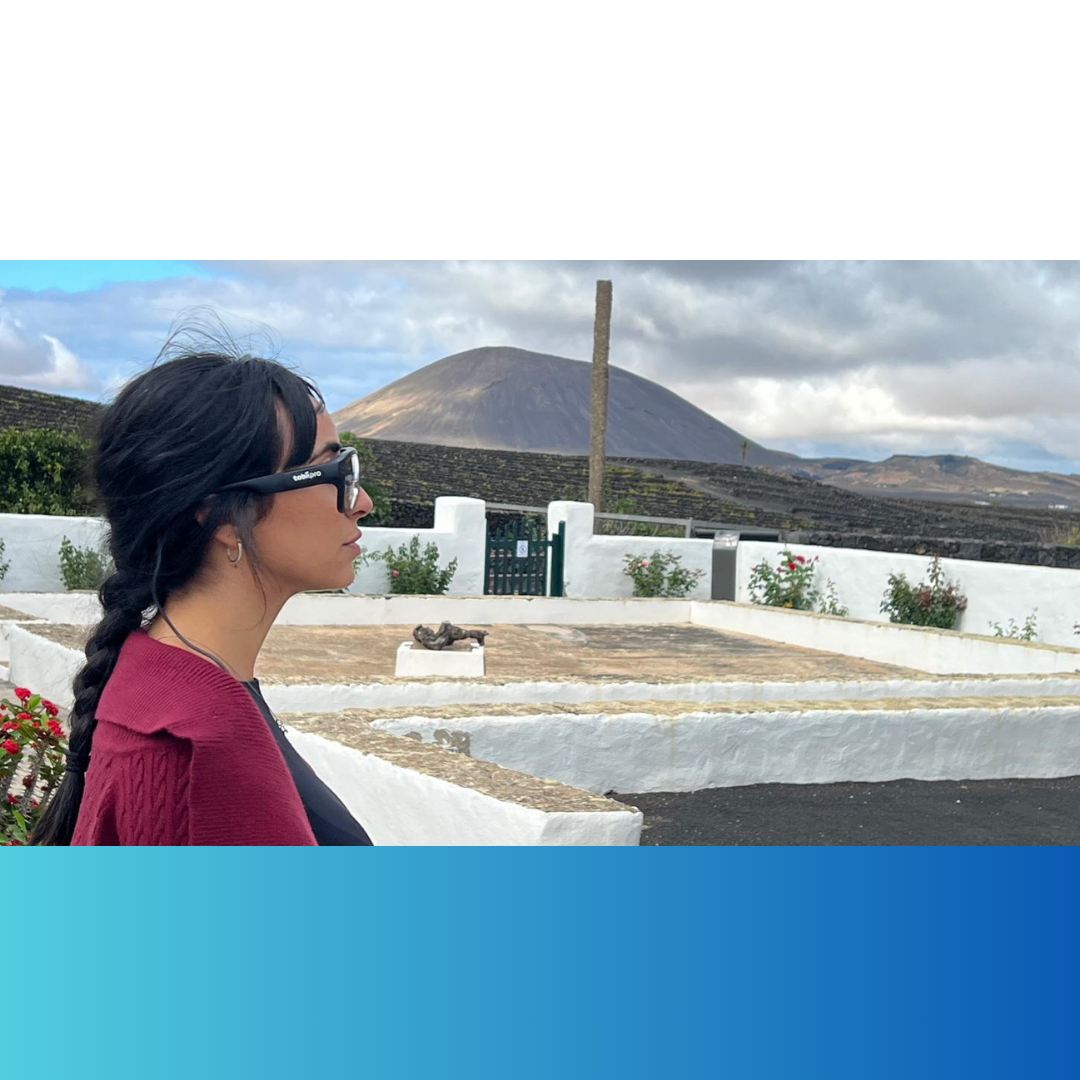
What is the experience like at the oldest winery in the Canary Islands? We didn’t want to be told; we wanted to see and feel it through the eyes and emotions of the visitors. We applied cutting-edge technology to decode real tourist behavior in a unique setting: El Grifo (Lanzarote).
1. The Challenge: Beyond the “Like”
The central objective was to understand the visitor journey holistically:
-
Visual Attention: Which museum elements truly capture interest?
-
Emotional Connection: What does the palate (and brain) feel when tasting a volcanic Malvasía?
-
Brand Psychology: How do label designs influence purchase intent and sustainability perception?
2. Our Methodology: Science Applied to Wine
We designed a pioneering study with 128 participants combining biometric and declarative metrics.
Science and Sensoriality
For this case study, we implemented an exploratory and descriptive research design that integrates cutting-edge neuromarketing techniques with traditional quantitative and qualitative methods. The goal was to overcome the limitations of conventional market research by capturing both the unconscious processes that guide attention and the conscious evaluations of the visitors.
The study was conducted entirely at the El Grifo Wine Museum in Lanzarote. We chose this setting because it is a real and authentic environment—an “ecological study”—that allows for the observation of tourist behavior within a unique heritage context.
The research was structured into three complementary lines of work:
-
Study 1: In-situ Immersion and Attention: We used mobile eye-tracking glasses to record participants’ free movement through the winery and museum. This technique allowed us to reconstruct exact visual trajectories and identify which museum or informative resources concentrate the greatest spontaneous interest.
-
Study 2: Brand Perception and Visual Identity: Using a fixed eye-tracking system, we analyzed how customers react to various label proposals and graphic materials on screen. We evaluated visual hierarchy, reading order, and the impact of key elements such as color and sustainability messaging. This phase was complemented by an Implicit Association Test (IAT), designed to measure the automatic and unconscious relationship the consumer establishes between the El Grifo brand and strategic destination concepts.
-
Study 3: Emotional Response and Sensory Experience: The final phase focused on the controlled tasting of two wines: a young wine and an aged one (Seco and Lías). While participants conducted the tasting, we employed facial coding systems to detect micro-expressions and variations in emotional valence. This allowed us to link biometric emotional reactions with the liking scores and purchase intent subsequently declared by the user in a final questionnaire.
Upon completing these tasks, participants answered a semi-structured quantitative questionnaire to contextualize their consumption habits and sociodemographic data.
3. The Hypotheses: Putting Intuition to the Test
We sought to validate if visual fixation time translates into recall, if label design determines the final choice, and if real emotional differences exist between a young wine and an aged one.
4. The Setting: A Living Laboratory
We conducted the study under real-world conditions (ecological study). The El Grifo Wine Museum allowed us to analyze a diverse flow of national and international tourists within an authentic, heritage-rich context.